

CURRENT AFFAIRS | MARCH 2026
Prelims: India-Brazil bilateral agreements, Board of Peace membership, BRICS, G20 presidency, South-South cooperation
Mains: GS-II (Bilateral relations, India’s foreign policy doctrine, International institutions and their role in global governance), GS-II (Effect of policies and politics of developed and developing countries on India’s interests)
India-Brazil Strategic Partnership: A New Chapter in South-South Cooperation
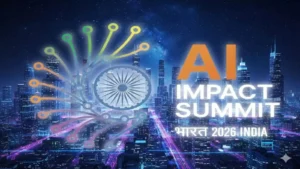
The diplomatic landscape between India and Brazil witnessed a transformative moment when Brazilian President Luiz Inacio Lula da Silva undertook a state visit to India from February 18-22, 2026, coinciding with the AI Summit hosted by India. This was Lula’s second visit to India — his first being for the G20 Summit in September 2023 during India’s presidency. The reciprocal nature of high-level engagement was established when Prime Minister Narendra Modi visited Brasilia on July 7-8, 2025, a visit that carried immense symbolic weight as it was the first bilateral visit by an Indian Prime Minister to Brazil after a 57-year gap.
This flurry of diplomatic activity underscores a fundamental realignment in India’s foreign policy calculus, where Latin American partnerships are being elevated from peripheral to strategic. Brazil, as the largest economy in Latin America and a fellow BRICS member, represents a natural partner for India’s aspirations in multilateral forums.
– 10 agreements signed across diverse sectors
– Focus areas: Critical minerals, digital cooperation, health, MSME, mass communication
– Launch of India-Brazil Digital Partnership for the Future centred on DPI
– Reinforcement of South-South cooperation framework
– Convergence on BRICS-G20 institutional synergies
Ten Agreements: Mapping the Breadth of Bilateral Engagement
The ten agreements signed during the summit reflect a deliberate strategy to diversify the bilateral relationship beyond traditional trade. The agreement on critical minerals is particularly significant in the context of the global energy transition — Brazil possesses substantial reserves of lithium, niobium, and rare earth elements that are essential for India’s electric vehicle and semiconductor ambitions.
The India-Brazil Digital Partnership for the Future represents the most forward-looking component of the agreements. Centred on Digital Public Infrastructure (DPI), this partnership seeks to replicate the success of India’s UPI, Aadhaar, and DigiLocker stack in the Brazilian context. India’s DPI model has already gained international recognition through the G20 Digital Public Infrastructure Repository, and Brazil’s adoption would validate India’s position as a global DPI leader.
The India-Brazil relationship operates at three levels: (1) Bilateral — trade, investment, technology transfer; (2) Plurilateral — BRICS, IBSA, G4 for UNSC reform; (3) Multilateral — G20, WTO, climate negotiations. For Mains GS-II, analyse how India leverages these multiple platforms to advance its interests simultaneously. The concept of “multi-alignment” replaces the Cold War notion of non-alignment.
The agreements on health cooperation build on the pandemic-era collaboration where India supplied vaccines to Brazil. The MSME cooperation agreement recognises that both countries have vast informal economies, and formalisation through shared best practices can boost productivity. The mass communication agreement addresses the soft power dimension — both countries have vibrant media ecosystems that remain surprisingly disconnected.
The Board of Peace: Trump’s Gaza Reconstruction Architecture
The Board of Peace, established by the Trump administration, represents a novel approach to post-conflict reconstruction in Gaza. The board comprises 27 full members and 22 observers, with India designated as an observer.
27 Members: Israel, Egypt, Jordan, Saudi Arabia, UAE, Qatar, Turkey, Pakistan, Argentina, Hungary, and others
22 Observers: India, UK, Germany, EU, Japan, and others
Membership requirement: $1 billion contribution OR 3-year term commitment
India’s status: Observer
India’s observer status in the Board of Peace reflects a carefully calibrated diplomatic posture. By not committing to full membership (which would require either a $1 billion financial commitment or a 3-year term), India maintains strategic flexibility. This positioning allows India to engage with the Gaza reconstruction process without being bound by the political constraints that full membership would entail.
The composition of the Board is itself revealing. The inclusion of Pakistan and Turkey as full members — both traditionally sympathetic to the Palestinian cause — alongside Israel suggests an attempt to create a broad-based legitimacy for the reconstruction effort. Argentina and Hungary, both led by governments ideologically aligned with the Trump administration, add a geopolitical dimension.
India’s Balancing Act: West, Arab World, and Global South
India’s engagement with the Board of Peace must be understood within the broader context of its Middle East foreign policy. India maintains robust relationships with Israel (defence, technology), Saudi Arabia and UAE (energy, diaspora, investment), and has traditionally supported the Palestinian cause in multilateral forums. The observer status allows India to preserve all these relationships simultaneously.
Essay topic: “India’s observer status in multilateral forums reflects strategic pragmatism rather than diplomatic indecision.” Discuss with reference to the Board of Peace and India’s positions in BRICS, G20, and the Quad. Analyse whether India’s multi-alignment strategy is sustainable in an increasingly polarised world order. Consider the tension between strategic autonomy and the need for alliance-building in the context of GS-II Paper.
The BRICS-G20 convergence visible in India-Brazil relations also has implications for the Board of Peace. Both India and Brazil have advocated for multipolarity in international relations and have resisted frameworks that are perceived as Western-dominated. The Board of Peace, being a US-initiated body, presents a test case for how Global South nations navigate participation in Western-led institutional architectures while maintaining their strategic autonomy.
C — Critical minerals
L — Liaison on mass communication
A — Assistance in health
M — MSME cooperation
D — Digital Partnership (DPI)
The trajectory of India-Brazil relations and India’s positioning on the Board of Peace collectively illustrate the evolving nature of Indian diplomacy — one that prioritises issue-based coalitions over rigid alliance structures, and seeks to maximise India’s influence across multiple geopolitical theatres simultaneously.
Source: UPSC Essentials, The Indian Express — March 2026
Practice Quiz — 10 UPSC-Style Questions
Click an option to reveal the answer and explanation.