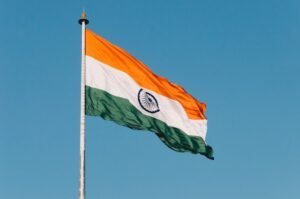


CURRENT AFFAIRS | MARCH 2026
Prelims: Lok Sabha Rules 41(2), PM CARES/PMNRF/NDF, Vande Mataram protocol, Urban Challenge Fund, Vibrant Villages Programme Phase 2, AI deepfake regulations
Mains: GS-II (Parliament — question hour rules, executive accountability, urban governance, 74th Amendment), GS-IV (Ethics in AI regulation), GS-I (National symbols and their constitutional status)
Parliamentary Accountability: PM CARES, PMNRF & NDF — The Rule 41 Shield
A significant constitutional governance issue has emerged around the inadmissibility of questions regarding certain funds in the Lok Sabha. Under Rule 41(2)(viii) and Rule 41(2)(xvii) of the Lok Sabha Rules of Procedure, questions pertaining to PM CARES Fund, Prime Minister’s National Relief Fund (PMNRF), and the National Defence Fund (NDF) are deemed inadmissible.
The PM CARES Fund (Prime Minister’s Citizen Assistance and Relief in Emergency Situations) was established in 2020 during the COVID-19 pandemic. The PMNRF dates back to 1948, established by Prime Minister Jawaharlal Nehru originally for the relief of displaced persons from Pakistan. The National Defence Fund, chaired by the Prime Minister, supports the Armed Forces.
The inadmissibility of questions about PM CARES under Rule 41(2) raises fundamental questions about parliamentary oversight of public funds. For GS-II Mains, analyse the tension between: (1) The PM’s prerogative to manage emergency funds with operational flexibility; (2) Parliament’s role as the guardian of public money under Articles 112-117; (3) The CAG’s audit jurisdiction — PM CARES is not audited by CAG as it is a public charitable trust, not a government fund. Consider whether the RTI Act should apply to such funds.
AI Deepfake Regulation: 3-Hour Takedown Mandate
The government announced a landmark regulation mandating 3-hour takedown of AI deepfakes with mandatory labeling of AI-generated content. This regulation addresses the growing threat of synthetic media manipulation in Indian democracy, particularly concerning election integrity and personal privacy.
The 3-hour window places India among the most aggressive regulatory regimes globally for deepfake content. For comparison, the EU’s AI Act requires labeling but does not mandate specific takedown timelines. The regulation builds on the IT Act, 2000 (as amended) and the IT Rules, 2021, which already mandate intermediary liability for unlawful content.
The deepfake regulation intersects with multiple GS papers. For GS-IV Ethics: What are the ethical obligations of technology platforms in a democracy? For GS-II: How does AI regulation balance free speech (Article 19(1)(a)) with reasonable restrictions (Article 19(2))? For GS-III: Role of technology in internal security. Consider the Shreya Singhal v. Union of India (2015) framework on intermediary liability.
Vande Mataram: MHA Protocol and Constitutional Status
The Ministry of Home Affairs (MHA) released an official protocol for the singing of Vande Mataram, specifying that all 6 stanzas should be sung in 3 minutes and 10 seconds, and it should be rendered before Jan Gana Mana at official events.
The history of Vande Mataram carries deep constitutional significance. Composed by Bankim Chandra Chattopadhyay in 1875, it was included in his novel Anandamath (1881) and first sung at the Indian National Congress session in 1896. The Constituent Assembly accorded it “equal honour with the National Anthem” on January 24, 1950, though it is designated as the National Song, not the National Anthem.
– 1875: Composed by Bankim Chandra Chattopadhyay
– 1881: Published in Anandamath
– 1896: First sung at INC session
– 1950: Designated National Song by Constituent Assembly
– Duration: 3 minutes 10 seconds (all 6 stanzas)
– Protocol: Sung before Jan Gana Mana
Seva Teerth: Renaming the Executive Enclave
The PMO complex on Dara Shikoh Road has been renamed Seva Teerth (Pilgrimage of Service) as part of the broader Central Vista redevelopment project. The renaming transforms the administrative complex into the Executive Enclave, signifying a shift in the symbolic language of governance — from bureaucratic power to public service.
The Central Vista project has been one of the most debated urban development initiatives in recent years. It encompasses the new Parliament House (Sansad Bhavan), the Prime Minister’s residence, a new Vice President’s Enclave, and the Common Central Secretariat. The project raises important questions about heritage conservation (the original Lutyens’ Delhi), urban planning, and democratic symbolism.
Urban Challenge Fund: Rs 1 Lakh Crore for Municipal Transformation
The announcement of the Urban Challenge Fund with a total outlay of Rs 1,00,000 crore marks a significant escalation in India’s urban governance financing. The funding structure is innovative: 25% from the Central government and 50% from market sources including municipal bonds and PPP arrangements.
The reliance on municipal bonds is particularly significant. Indian municipalities have historically been financially dependent on state governments, with limited own-revenue sources. The 74th Constitutional Amendment (1992) mandated devolution of powers to urban local bodies, but fiscal devolution has remained incomplete. The Urban Challenge Fund’s market-linked funding model forces municipalities to improve their creditworthiness, financial management, and governance standards to access bond markets.
The Urban Challenge Fund should be read alongside the Amrut 2.0, Smart Cities Mission, and Swachh Bharat Mission (Urban). For GS-II, the critical question is: Can market-based financing mechanisms succeed where constitutional mandates have failed? The second Administrative Reforms Commission noted that Indian ULBs generate only 0.6% of GDP in revenue, compared to 7-8% in developed countries. The PPP component raises questions about public accountability in privatised urban services.
Vibrant Villages Programme Phase 2: Indo-Bangladesh Border
The Vibrant Villages Programme Phase 2 extends coverage to the Indo-Bangladesh border, covering 1,954 villages with an allocation of Rs 6,839 crore. This is a significant expansion from Phase 1, which focused on the Indo-China border. The programme aims to develop infrastructure, provide livelihood opportunities, and reduce outmigration from border villages, thereby strengthening India’s border population as a first line of defence.
P — PM CARES / PMNRF / NDF (Rule 41 inadmissibility)
A — AI deepfake (3-hour takedown)
V — Vande Mataram (MHA protocol, 3:10, 1875)
S — Seva Teerth (Executive Enclave, Central Vista)
U — Urban Challenge Fund (Rs 1L Cr) + VVP Phase 2
Source: UPSC Essentials, The Indian Express — March 2026
Practice Quiz — 10 UPSC-Style Questions
Click an option to reveal the answer and explanation.